If you’ve been exploring modern bathroom remodel ideas, you’ve probably come across the term wet room bathroom. Known for their sleek design and spa-like feel, wet rooms are becoming increasingly popular in both luxury homes and practical renovations.
But what exactly is a wet room, and is it the right choice for your space?
A wet room bathroom is more than just a design trend. It’s a fully waterproofed bathroom layout that eliminates barriers like traditional shower enclosures, creating a seamless and highly functional space.
In this guide, we’ll break down what a wet room bathroom is, how it works, its pros and cons, and whether it makes sense for your home, especially if you’re planning a remodel.
What Is a Wet Room Bathroom?
A wet room bathroom is a fully waterproofed bathroom where the shower area is integrated into the overall space, rather than being enclosed by a tub or shower stall.
Key Features of a Wet Room:
- Open-concept shower design.
- Fully waterproofed floors and walls (tanking system).
- Sloped flooring for drainage.
- Minimal or no shower enclosure.
- Seamless, modern aesthetic.
Instead of separating wet and dry zones, a wet room is designed so that water can safely flow throughout designated areas of the space.
How Does a Wet Room Bathroom Work?
The functionality of a wet room bathroom comes down to proper waterproofing and drainage design.
- Waterproofing (Tanking System): A waterproof membrane is installed beneath tiles on floors and walls to prevent water from seeping into the structure.
- Sloped Flooring: The floor is slightly angled toward a drain to ensure water flows correctly and doesn’t pool.
- Drainage System: Linear or central drains are used to quickly remove water from the space.
- Ventilation: Proper ventilation is essential to control moisture and prevent mold or mildew buildup.
Benefits of a Wet Room Bathroom
Wet rooms offer both aesthetic and practical advantages.
1. Modern, Open Design
Wet rooms create a clean, minimalist look that works well in contemporary homes.
- No bulky shower enclosures.
- Seamless tile design.
- Visually larger space.
2. Easier Accessibility
Wet rooms are ideal for:
- Aging-in-place designs.
- Mobility needs.
- Barrier-free entry.
This makes them a popular option for long-term usability.
3. Low Maintenance Cleaning
With fewer edges, doors, and barriers:
- Less buildup of grime and soap scum.
- Easier to clean surfaces.
- Simplified maintenance routine.
4. Space Optimization
Wet rooms can make smaller bathrooms feel larger by eliminating visual barriers.
Potential Drawbacks to Consider
While wet rooms offer many benefits, they’re not right for every home.
1. Higher Installation Cost: Proper waterproofing and drainage require specialized work, which can increase upfront costs.
2. Water Splashing: Without a full enclosure, water may spread beyond the shower area if not designed correctly.
3. Requires Professional Installation: Improper installation can lead to:
- Water damage.
- Mold growth.
- Structural issues.
This is why working with experienced remodelers is critical.
Related Read: Why Invest in a Bathroom Remodel
Is a Wet Room Bathroom Right for Your Home?
A wet room isn’t a one-size-fits-all solution. It depends on your space, lifestyle, and renovation goals.
Wet Rooms are Ideal If You:
- Want a modern, spa-like design.
- Need accessibility or barrier-free entry.
- Are doing a full bathroom remodel.
- Have proper drainage and layout flexibility.
Wet Rooms May Not Be Ideal If You:
- Prefer traditional bathroom layouts.
- Want to keep water strictly contained.
- Are working with a limited renovation budget.
- Have structural limitations.
Design Considerations for a Wet Room Bathroom
If you’re considering a wet room, design details matter.
- Flooring Materials: Slip-resistant tile is essential and Porcelain and textured tiles are popular options.
- Drain Placement: Linear drains for modern aesthetics and Central drains for traditional layouts.
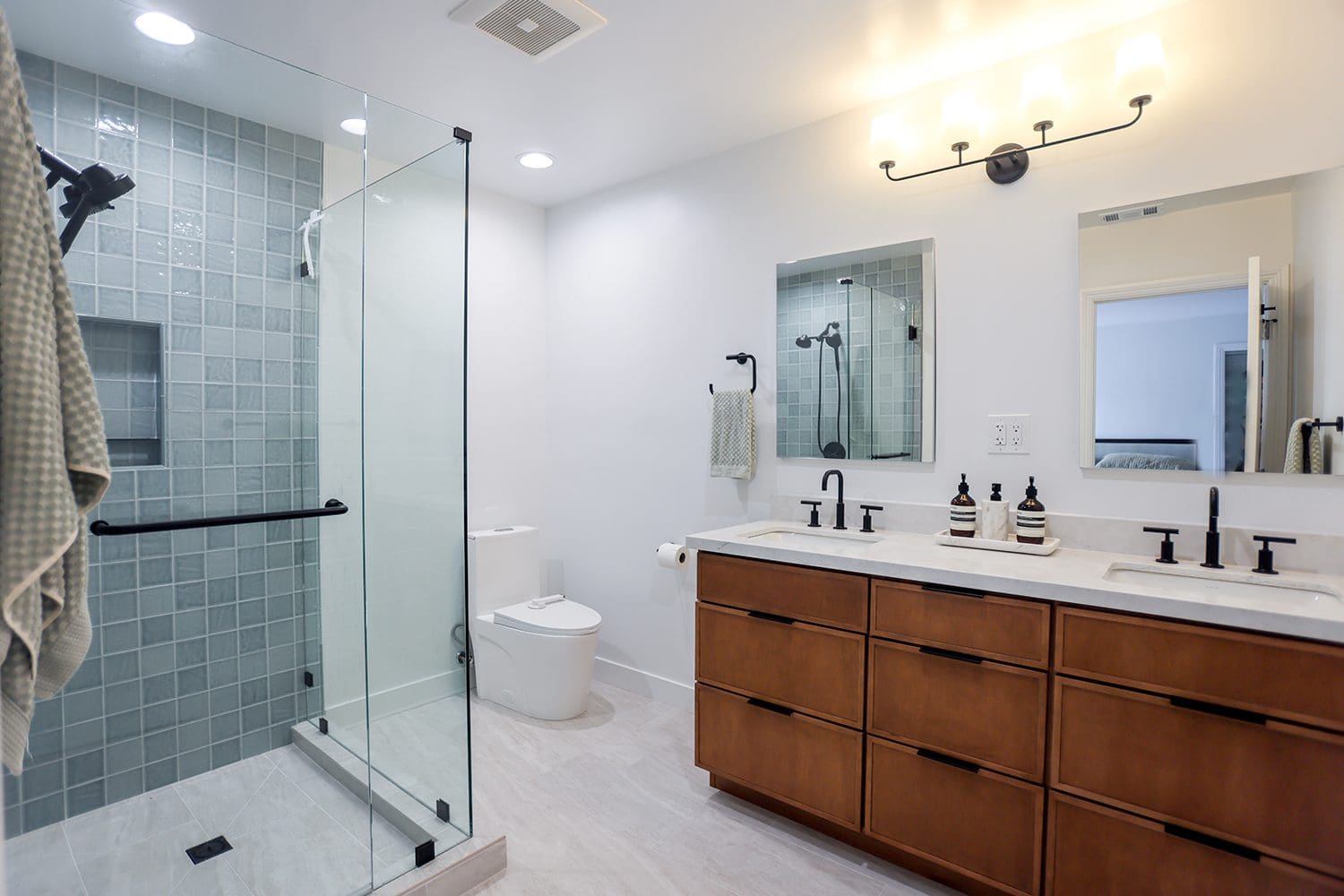
- Glass Panels (Optional): Partial glass screens can help reduce splashing while maintaining an open feel.
- Lighting and Layout: Good lighting enhances the open design and improves usability.
Wet Room vs Traditional Bathroom: Key Differences
| Feature | Wet Room Bathroom | Traditional Bathroom |
| Shower design | Open | Enclosed |
| Waterproofing | Full room | Limited to shower area |
| Accessibility | High | Moderate |
| Maintenance | Easier | More components to clean |
| Cost | Higher upfront | Lower upfront |
How Much Does a Wet Room Bathroom Cost?
Costs can vary depending on:
- Size of the bathroom.
- Materials used.
- Complexity of installation.
- Drainage and plumbing updates.
Wet rooms typically cost more than standard bathroom remodels due to waterproofing and structural work, but they can also add long-term value and functionality.
Related Read: Bathroom Remodel Cost Breakdown
Common Mistakes to Avoid
Designing a wet room requires attention to detail.
Avoid These Mistakes:
- Poor drainage slope.
- Inadequate waterproofing.
- Skipping ventilation planning.
- Choosing slippery flooring.
- DIY installation without expertise.
Working with professionals helps ensure the space performs as intended.
Final Thoughts
A wet room bathroom offers a modern, functional, and highly customizable approach to bathroom design. With its open layout, accessibility benefits, and sleek appearance, it’s an excellent option for homeowners looking to upgrade their space.
However, success comes down to proper planning, professional installation, and thoughtful design.
If you’re considering a bathroom remodel, a wet room could be the perfect way to combine style, comfort, and long-term usability.