Staying in a familiar home can provide comfort, stability, and independence as you get older. However, a home that works well today may become harder to navigate as mobility, balance, vision, or other physical needs change.
Aging in place means adapting your home and daily routines so you can continue living independently for as long as possible. This may involve simple changes, such as improving lighting and removing trip hazards, or larger renovations, such as installing a first-floor bathroom or creating a step-free entrance.
Planning ahead allows homeowners to make these improvements gradually rather than waiting until an accessibility problem becomes urgent.
What Does Aging in Place Mean?
Aging in place refers to the ability to remain in your own home and community safely and comfortably as you grow older, rather than moving to an assisted living facility or another care setting.
It doesn’t necessarily mean making extensive renovations. The goal is to create a home that can accommodate changing physical needs without sacrificing comfort, appearance, or independence. Common aging-in-place improvements include:
- Removing steps and uneven thresholds.
- Improving lighting throughout the home.
- Installing handrails and grab bars where needed.
- Making doorways and hallways easier to navigate.
- Replacing difficult-to-use knobs with lever handles.
- Creating more accessible kitchens and bathrooms.
- Moving frequently used items within comfortable reach.
These changes can also benefit people recovering from surgery, living with temporary mobility limitations, or accommodating a family member with a disability.
Essential Home Modifications for Aging in Place
A successful aging-in-place plan considers how you use the entire home. Focus on areas that present everyday challenges or may become difficult to navigate in the future.
- Make Entryways and Stairs Safer
Getting into and around the home should be straightforward, even when using a cane, walker, or wheelchair. Consider these improvements:
- Create a step-free entrance: A no-step entry or properly designed ramp can make coming and going easier.
- Install secure handrails: Add sturdy handrails on both sides of stairways where possible.
- Improve outdoor lighting: Illuminate porches, driveways, walkways, and entry points.
- Repair uneven surfaces: Fix cracked walkways, loose steps, and raised thresholds that could cause trips.
- Add a convenient resting spot: A bench near the entrance provides a place to sit while removing shoes or organizing belongings.
If stairs become increasingly difficult to use, consider whether essential living spaces can be relocated to the first floor.
- Improve Kitchen Accessibility
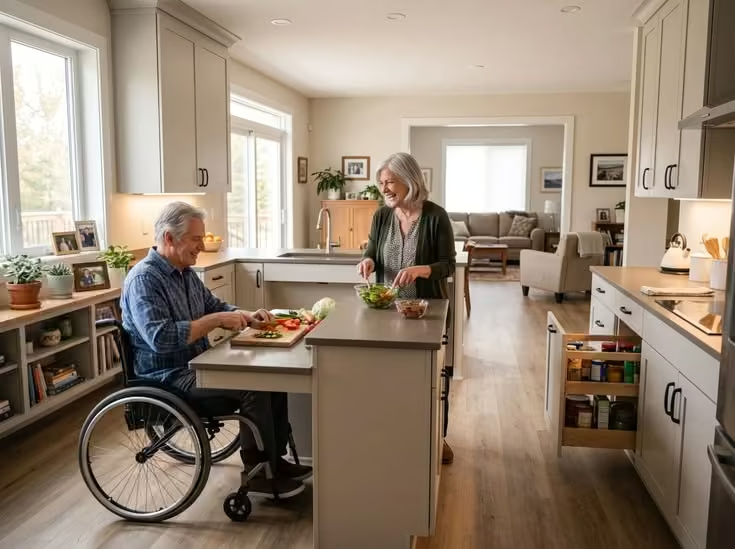
The kitchen involves frequent reaching, bending, lifting, and standing. Small design changes can make everyday tasks easier and reduce unnecessary strain. Useful modifications include:
- Installing pull-out drawers and shelves instead of deep, difficult-to-reach cabinets.
- Placing frequently used cookware, dishes, and food items at accessible heights.
- Improving task lighting around countertops, sinks, and cooking areas.
- Choosing lever-style faucets and easy-to-operate cabinet hardware.
- Keeping frequently used appliances within comfortable reach.
- Considering varied countertop heights or accessible work surfaces for seated use.
The goal is to make cooking and meal preparation manageable without requiring constant assistance.
- Make the Bathroom Safer and More Accessible
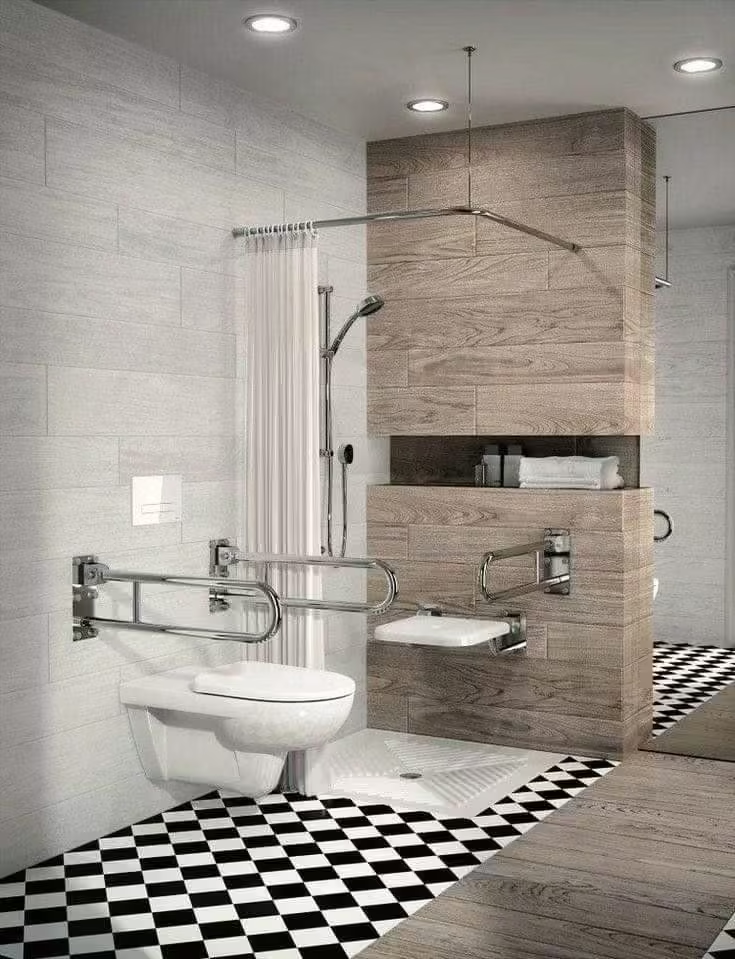
Bathrooms deserve particular attention because wet floors, slippery surfaces, and difficult transfers can create safety challenges. Depending on individual needs, consider:
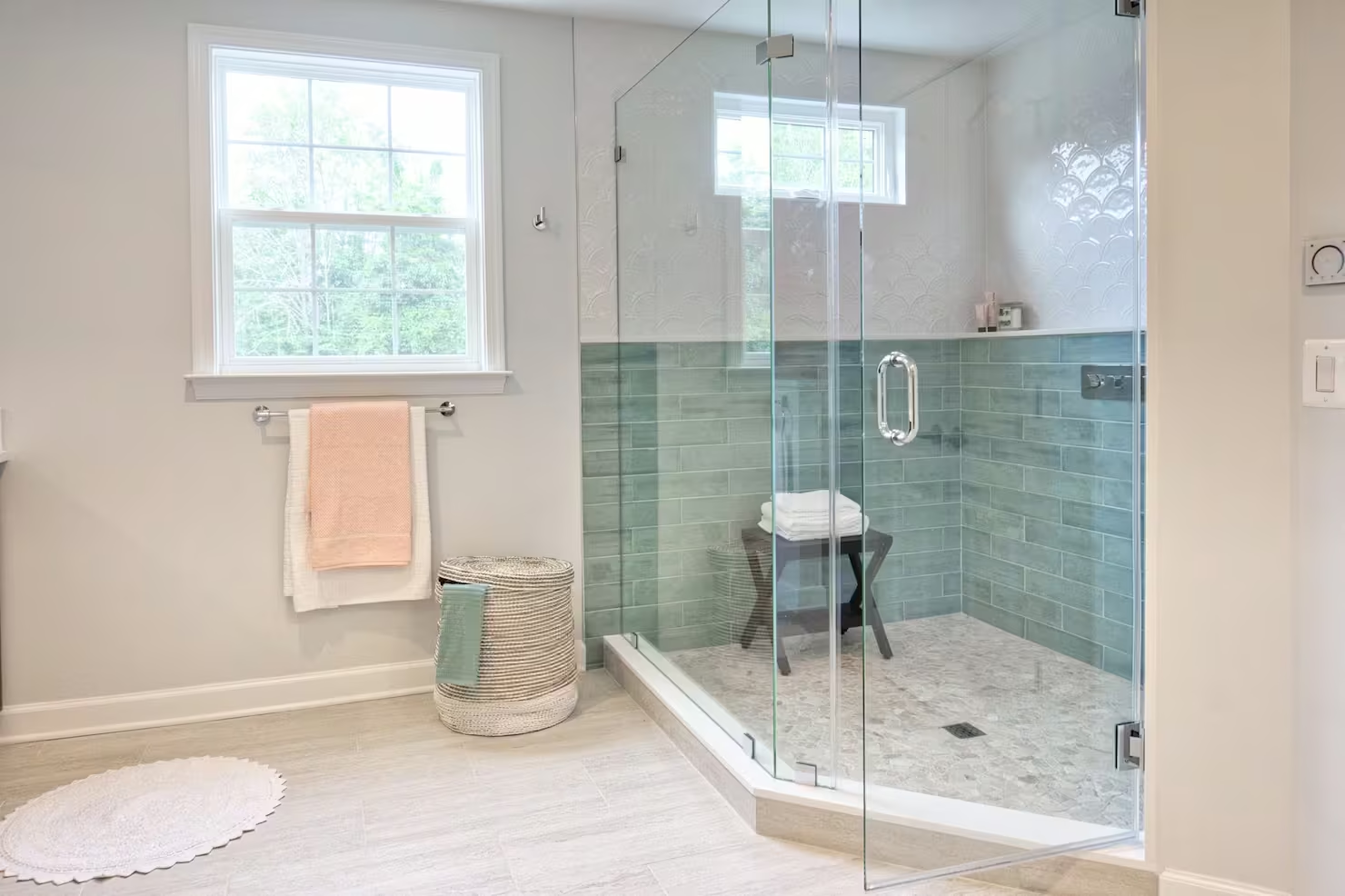
- Replacing a traditional bathtub with a walk-in shower.
- Installing securely anchored grab bars near the toilet and shower.
- Adding a built-in or adjustable shower seat.
- Choosing slip-resistant flooring.
- Installing a handheld showerhead.
- Considering a curbless shower entrance to reduce the need to step over a threshold.
Bathroom modifications should account for available space, mobility requirements, and the homeowner’s ability to use fixtures safely.
Related Read: Aging In Place Bathroom Design.
- Adapt Bedrooms and Living Areas
Bedrooms and living spaces should make everyday movement, resting, and accessing personal belongings easier. Consider the following changes:
- Improve furniture placement: Maintain clear pathways between furniture and frequently used areas.
- Choose supportive seating: Chairs with armrests and appropriate seat heights can make sitting and standing easier.
- Improve bedside access: Keep lighting, phones, and essential items within reach.
- Reorganize storage: Move frequently used clothing and household items to accessible shelves and drawers.
- Reduce floor hazards: Secure rugs, remove loose cords, and address uneven flooring.
If the primary bedroom is upstairs, consider creating a first-floor sleeping arrangement when climbing stairs becomes difficult.
- Improve Lighting and Everyday Controls
Lighting and home controls are easy to overlook, but they have a significant impact on how comfortably someone can navigate a home. Practical improvements include:
- Installing brighter, well-positioned lighting in hallways and stairways.
- Adding motion-activated lights in frequently used areas.
- Placing nightlights along routes between bedrooms and bathrooms.
- Using illuminated or easy-to-read switches.
- Replacing round doorknobs with lever handles.
- Installing easy-to-read thermostats and accessible controls.
Smart home technology, including voice-activated lighting and automated door locks, may also help reduce the need to reach, bend, or move between rooms.
How to Make Your Home Safer Without a Major Renovation
Not every aging-in-place improvement requires construction. Many homeowners can address everyday hazards through relatively simple changes. Start with these adjustments:
| Potential problem | Practical improvement |
| Loose rugs and electrical cords | Secure rugs and move cords away from walkways |
| Poor hallway lighting | Add brighter fixtures or motion-sensor lights |
| Hard-to-reach storage | Reorganize frequently used items |
| Difficult door handles | Install lever-style handles |
| Cluttered pathways | Rearrange furniture and remove obstacles |
| Slippery bathroom surfaces | Add appropriate non-slip flooring or treatments |
| Hard-to-use light switches | Install accessible or smart controls |
These changes can improve everyday convenience, but they are not substitutes for structural modifications when a home has significant accessibility limitations.
When Should You Start Planning for Aging in Place?
There is no specific age when homeowners need to start making aging-in-place improvements. The right time depends on current mobility, health, home layout, and long-term living plans.
However, planning before accessibility becomes an immediate concern can provide more flexibility.
For example, if you’re already remodeling a bathroom, it may make sense to incorporate a curbless shower, accessible fixtures, or structural support for future grab bars. Similarly, a planned kitchen renovation could include pull-out storage and more accessible work surfaces.
Related Read: When Should You Start Aging in Place Remodeling?
How to Prioritize Aging-in-Place Home Improvements
If your home needs several modifications, you don’t necessarily have to complete everything at once. A phased approach can help you manage the work while addressing the most important concerns first. A practical order of priority is:
- Address immediate safety concerns: Fix loose flooring, poor lighting, unstable railings, and other hazards.
- Improve frequently used spaces: Prioritize the bathroom, bedroom, kitchen, and main living areas.
- Address mobility barriers: Consider doorway clearance, stairs, thresholds, and accessible entrances.
- Plan for future needs: Incorporate adaptable features during upcoming renovations.
- Review your home periodically: Reassess whether the layout and modifications continue to meet your needs.
An occupational therapist or qualified aging-in-place specialist can help assess the home and identify modifications based on individual mobility and accessibility requirements.
When Should You Consider Professional Remodeling?
Some aging-in-place improvements are straightforward, but others require professional planning and installation. Consider working with an experienced remodeling contractor when you need to:
- Convert a traditional bathtub into an accessible shower.
- Install a curbless shower.
- Modify bathroom layouts to improve movement and accessibility.
- Adjust plumbing, flooring, or structural elements.
- Install fixtures that require proper wall reinforcement.
The right contractor should understand accessibility requirements and help incorporate practical features without making the home feel clinical or sacrificing its overall design.
Check Out: Aging-in-place Remodeling Services
Final Thoughts
Aging in place is about making your home work for you as your needs change. From improving access throughout the house to updating essential spaces like the bathroom, thoughtful modifications can make everyday living more comfortable and manageable.
If your bathroom needs an accessibility upgrade, One Week Bath can help you explore remodeling options designed around comfort, safety, and long-term usability.